
Tire Size Comparison Calculator
Tire A (Original)
Tire B (New)
Visual Comparison
Comparison Results
Free Online Tool for Tire Comparison & Speedometer Accuracy
What It Does
Our Tire Size Calculator takes the guesswork out of upgrading your wheels. Simply enter two tire sizes side-by-side and get instant comparisons of overall diameter, circumference, revolutions per mile, and most importantly—how much your speedometer will be off.
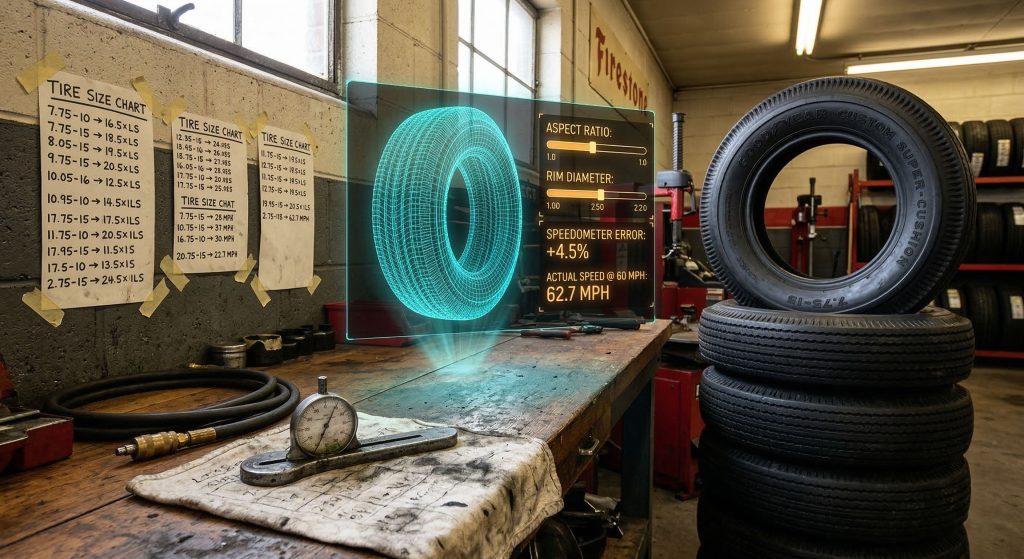
The tool generates a visual SVG comparison so you can literally see the difference between your current setup and potential new tires. If you’re also tracking fuel impact after a tire change, our Gas/Trip Cost Calculator is a practical next step.
Why It Matters
Ever put bigger tires on your car and noticed your speedometer reads slow? That’s because your car calculates speed based on how many times the wheels rotate. A larger tire travels farther with each revolution, meaning you’re going faster than your dash says.
This isn’t just about speeding tickets—incorrect speed readings can affect odometer accuracy, gear ratios, and even ABS performance. Plus, tires that are too large might rub against fenders or suspension components. If you’re comparing gearing or performance changes, our Engine Horsepower Calculator can help round out the picture.
How to Use It
1. Enter your current tire size in the first field (e.g., 225/45R17)
2. Enter the tire size you’re considering in the second field
3. Review the visual diagram showing the diameter difference
4. Check the speedometer error percentage
For best results, use the standardized format: Width(mm)/Aspect Ratio/Rim Diameter(inches). If you need to sanity-check inch/mm figures separately, our Length Conversion Calculator is handy.
Key Features
– Side-by-side tire comparison with clear measurements
– Visual SVG diagram showing relative diameters
– Speedometer error calculation in percentage and mph/kph
– Revs per mile comparison for gearing considerations
– Responsive design works on mobile devices
– No registration required—completely free to use
– Instant results with no page reload
Who Needs This
– Car enthusiasts planning wheel upgrades
– Mechanics advising customers on tire fitment
– Classic car owners converting to modern tire sizes
– 4×4 and truck owners considering lift kits and larger tires
– Track day drivers optimizing gearing with tire changes
– Anyone buying used wheels who needs to verify compatibility
FAQs
Q: What do the numbers on a tire mean?
A: A 225/45R17 tire has a 225mm width, 45% sidewall height (aspect ratio), Radial construction, and fits a 17-inch rim.
Q: How much speedometer error is acceptable?
A: Generally, staying within ±3% is recommended. Beyond that, your odometer and speed readings become significantly inaccurate.
Q: Can I use tires with different aspect ratios?
A: Yes, but you need to calculate the overall diameter. A 50-series tire on a narrower width can equal a 45-series on a wider width.
Q: Will larger tires hurt my fuel economy?
A: Typically yes—larger tires are heavier and create more rolling resistance. The speedometer error also means you’re recording fewer miles than actually driven.
Q: Do I need to recalibrate my speedometer?
A: If the error exceeds 5%, consider it. Some modern cars can be recalibrated through software; older vehicles may need mechanical adjustments.
Q: Does this calculator work for motorcycles and trailers?
A: Absolutely—the math is the same regardless of vehicle type.
Example Use Cases
- Wheel upgrades: Compare OEM tire sizes against aftermarket options before buying.
- Speedometer checks: See how much your speed reading changes after moving to a taller or shorter tire.
- Classic car fitment: Match modern tire sizes to older wheel setups without guesswork.
You might also find these tools useful:
Gas/Trip Cost Calculator
Engine Horsepower Calculator
Length Conversion Calculator